Entrepreneurship in the Service of Art and Culture
Entrepreneurship in the Service of Art and Culture
Innovation, courage, vision and a love of music. From the early nineteenth century to the present day.
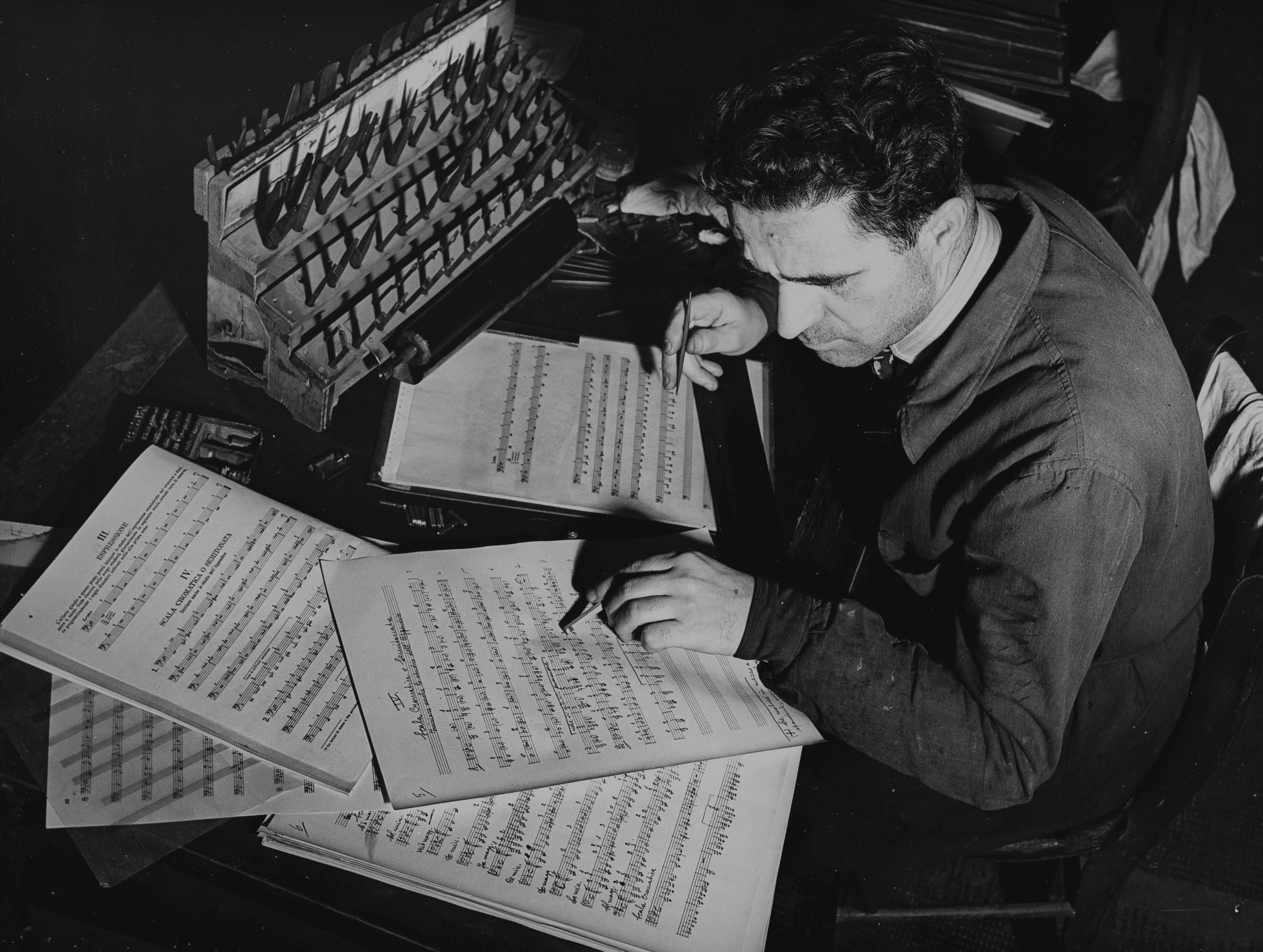
Ricordi
Ricordi
The historical periods that transformed a young entrepreneur’s vision into a successful venture. A story of people, bold decisions and creative achievements that helped bring the art of music to a wider audience.
1808-1853
Origins and Giovanni Ricordi
Origins and Giovanni Ricordi
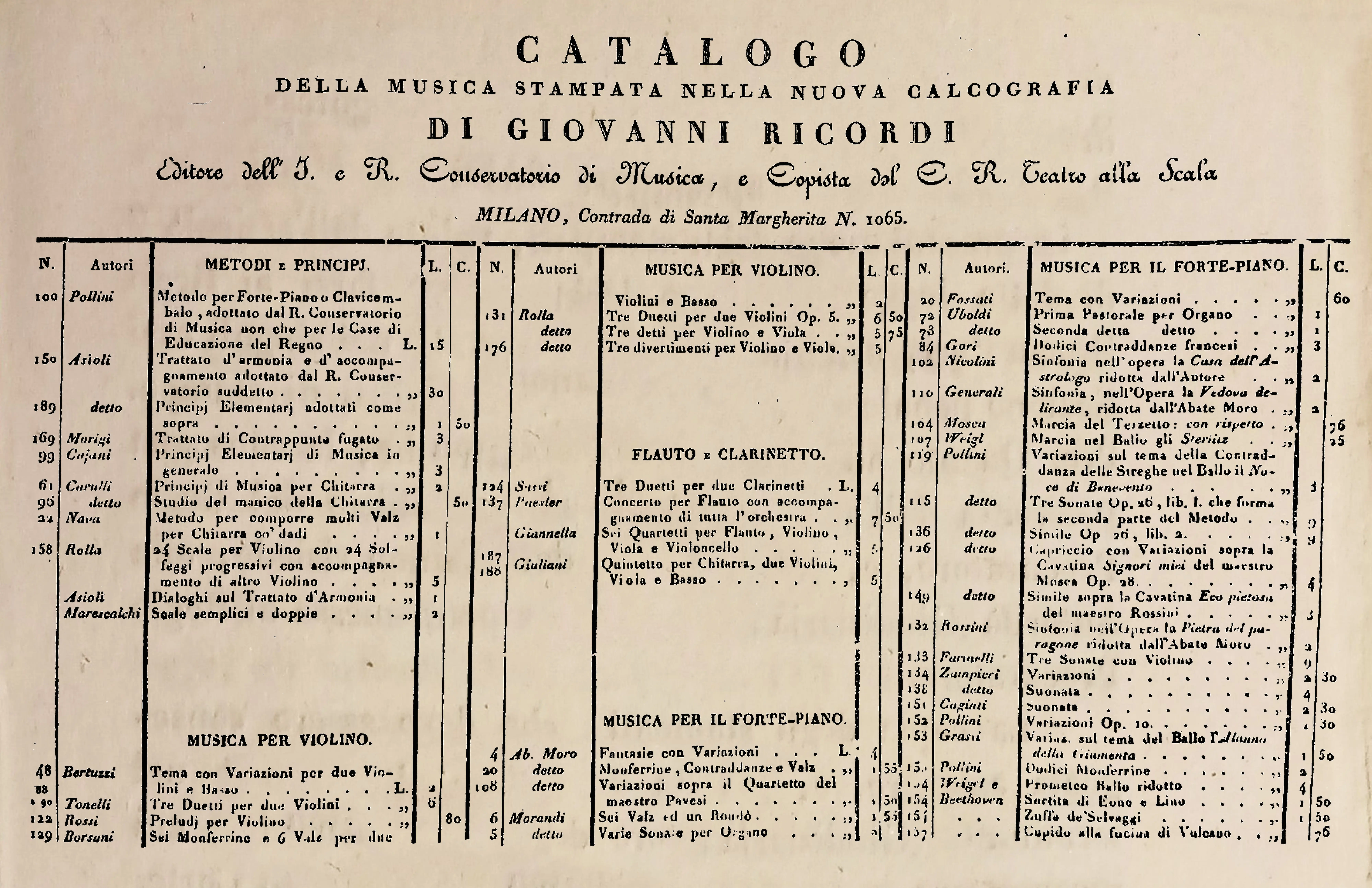
Ricordi was founded in Milan in 1808 by Giovanni Ricordi, a professional violinist and music copyist who, the previous year, had trained in Leipzig with the publisher Breitkopf & Härtel, acquiring advanced techniques in music printing.
1853-1888
Tito I Ricordi and the International Expansion of Ricordi
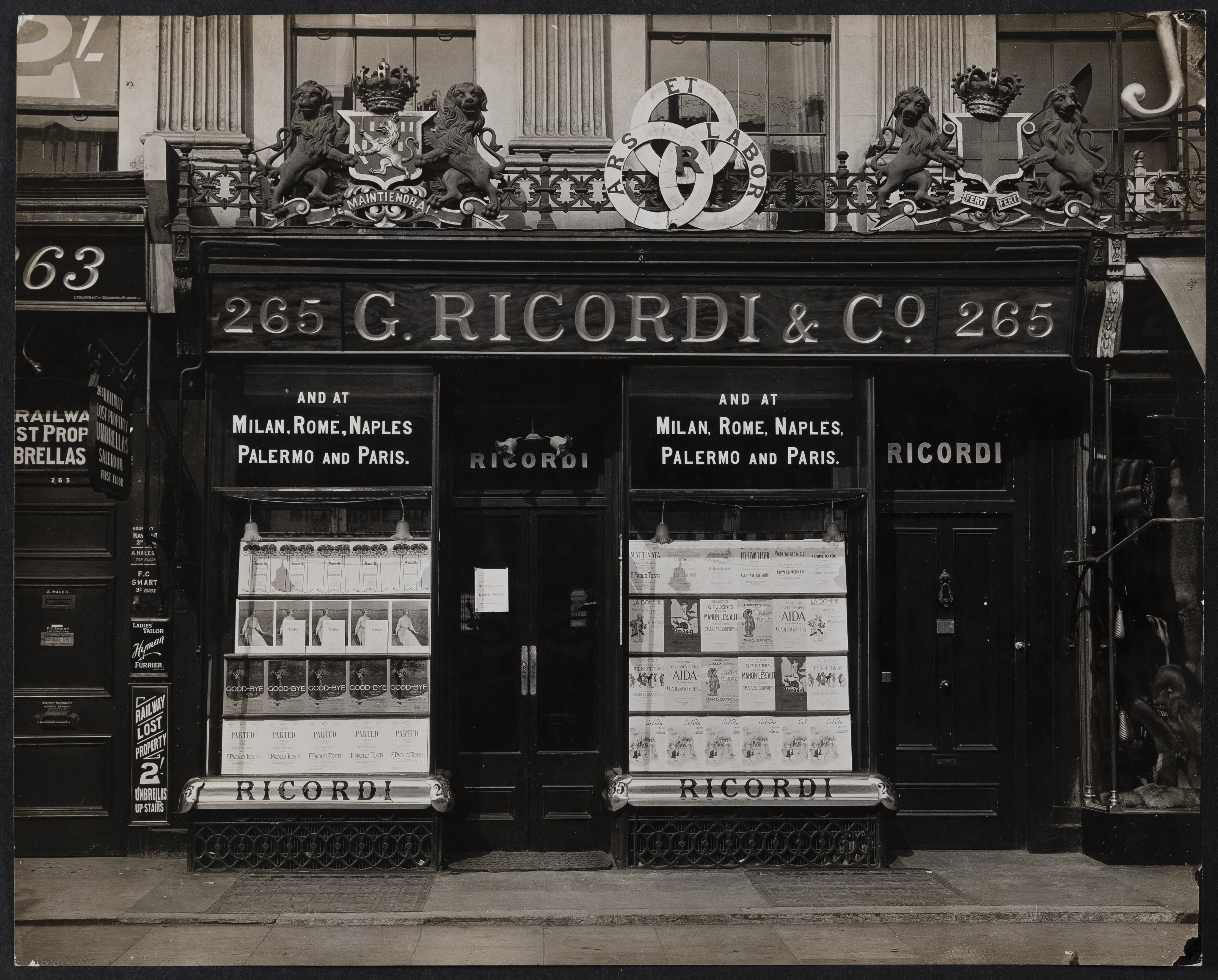
After Giovanni’s death in 1853, leadership of the company passed to his son Tito Ricordi (Tito I).
1888-1912
Giulio Ricordi and the Golden Age
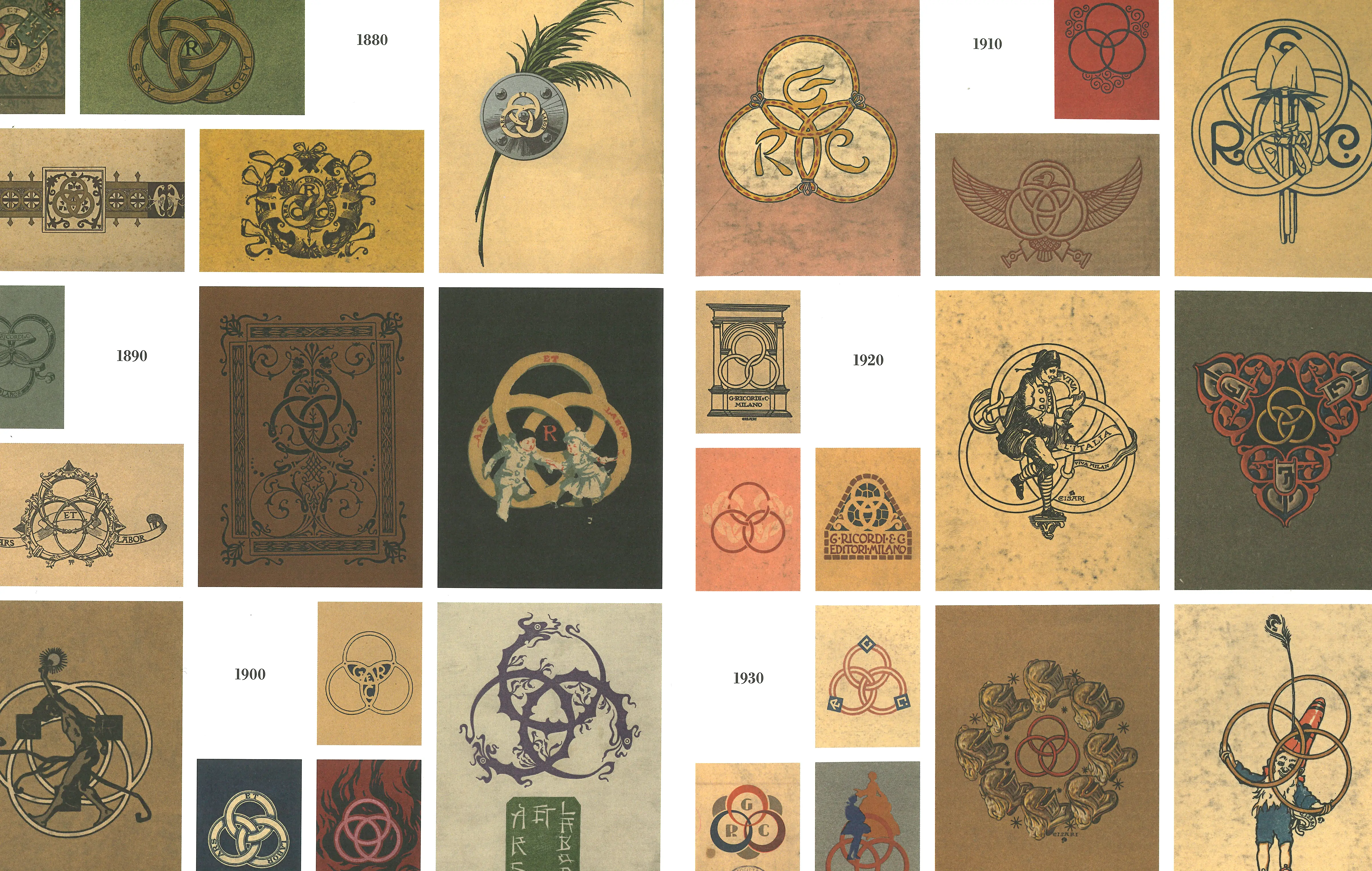
Under Giulio Ricordi — the son of Tito I — Casa Ricordi reached the height of its prestige.
1912-1919
Tito II Ricordi and the Challenges of the Early Twentieth Century
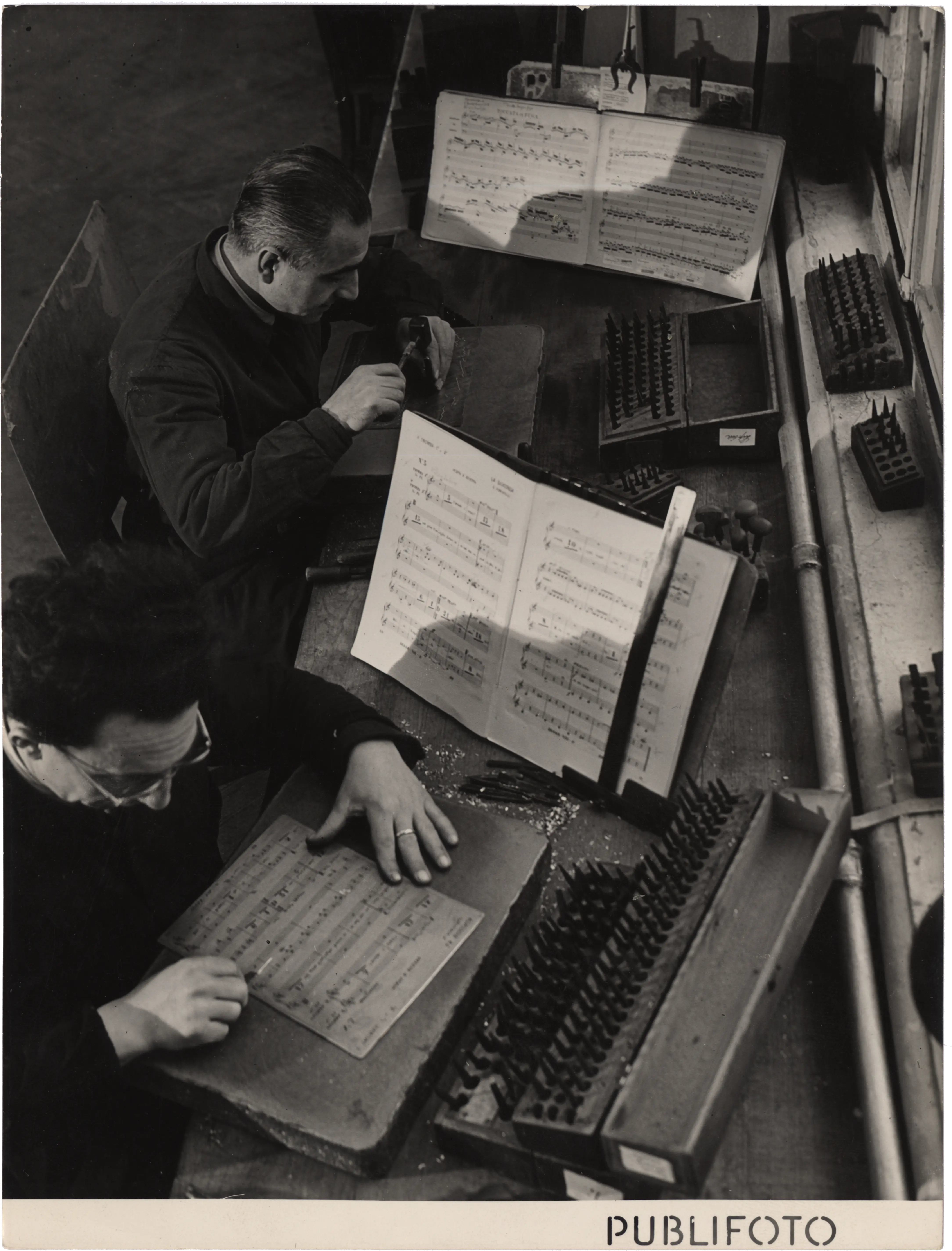
Following Giulio’s death, leadership passed to his son Tito Ricordi II (1865–1933), representing the fourth generation of the family.
1919-1943
A Period of Crisis: Valcarenghi and Clausetti
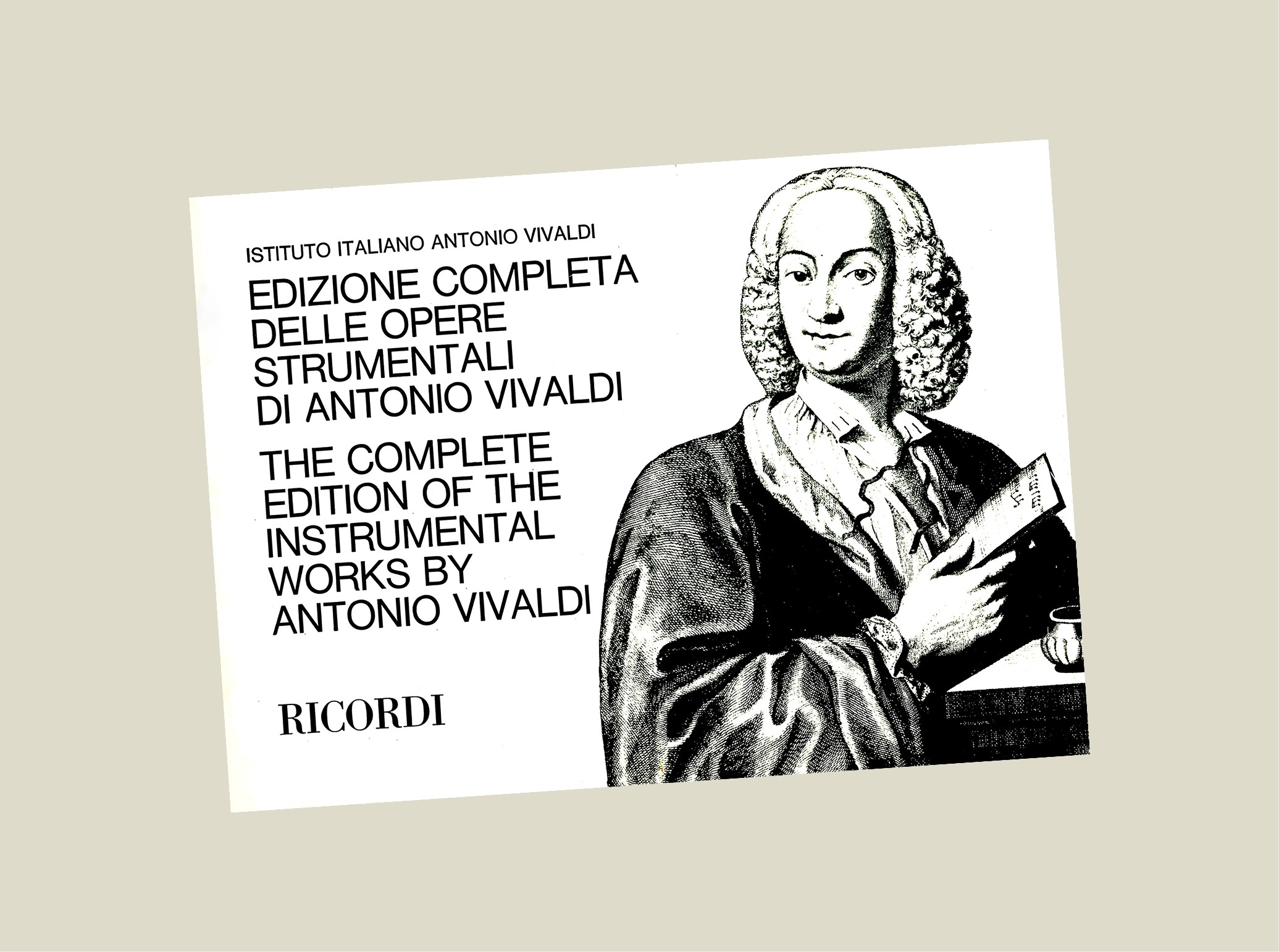
With Tito II’s departure in 1919, Casa Ricordi entered a new managerial phase, entrusted to professionals outside the family during a particularly difficult historical period.
1944-1956
Post-War Reconstruction and Revival
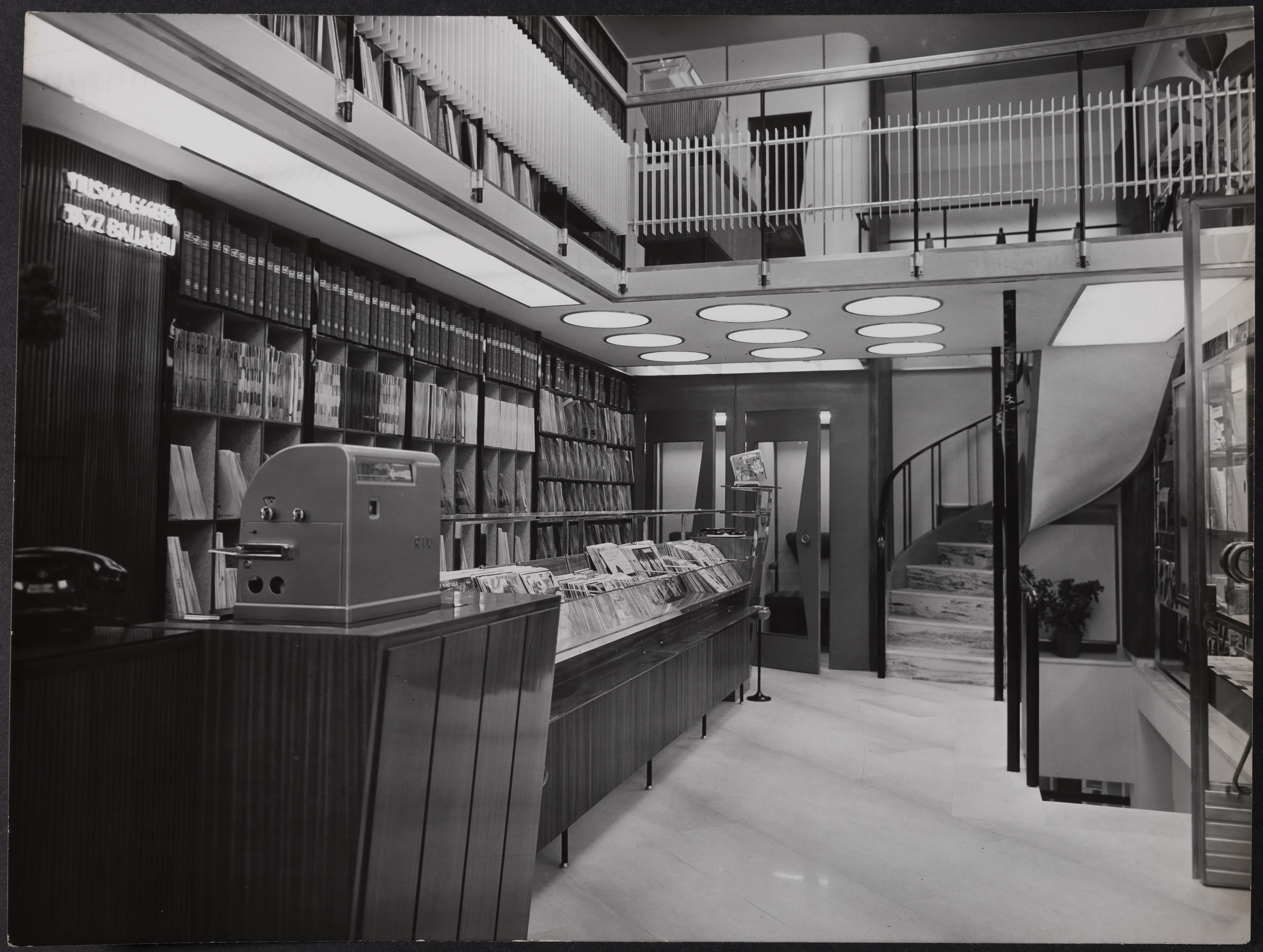
In 1944, as the war was drawing to a close, the Ricordi family made an unexpected return to a managerial role in order to contribute to the company’s revival.
1956-1963
The Rise of Singer-Songwriters and New Popular Music
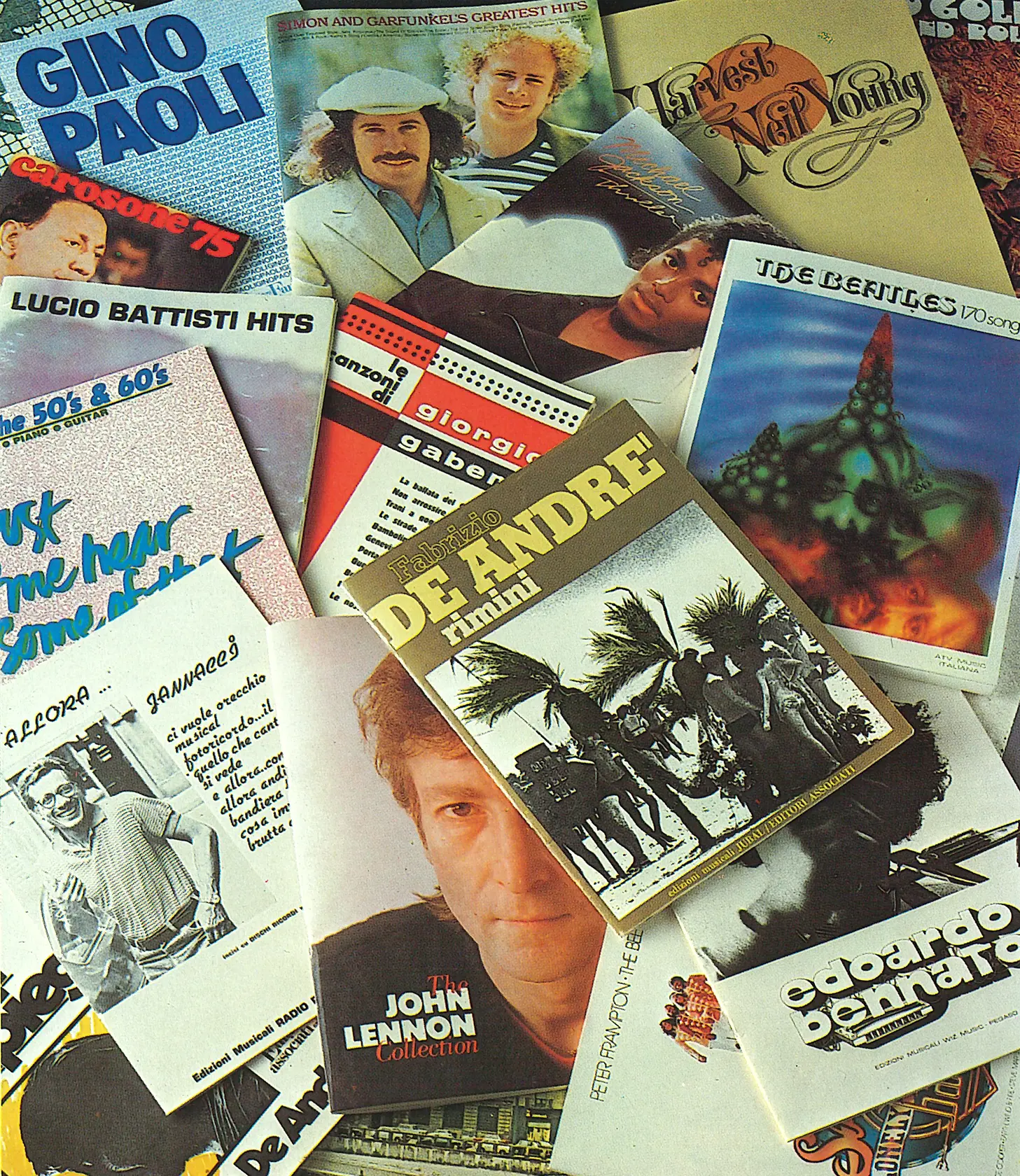
At the dawn of Italy’s economic miracle, Ricordi was ready to embrace the challenge of modernity in both popular and art music.
'60, '70 and '80
Tradition and the Avant-Garde
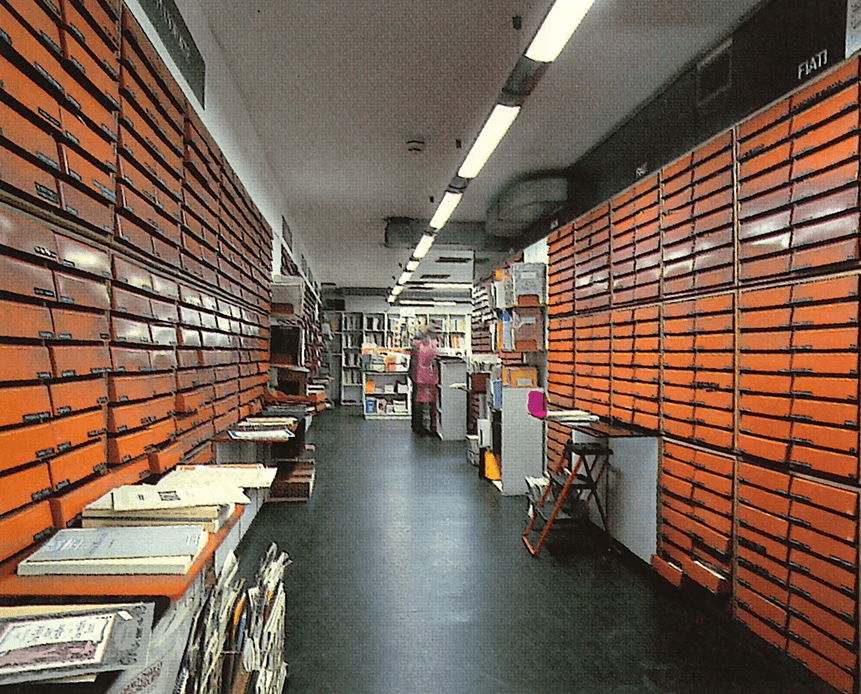
After 1963, Casa Ricordi increasingly focused its energies on its core business: classical and contemporary music publishing.
1994 - PRESENT
From Family Ownership to Major Groups

At the beginning of the 1990s, Casa Ricordi stood at its peak as Italy’s leading music publishing group, with diversified activities — publishing, recording and retail — and a strong international presence.

One Legacy, a Hundred Stories
One Legacy, a Hundred Stories
From Giovanni Ricordi’s pioneering insight in 1808 to the global transformations of the twenty-first century.
An entrepreneurial story that mirrors the evolution of music and of Italy’s cultural industries.
Ricordi has consistently embraced innovation: from print publishing to theatrical enterprise, from graphic design and advertising to the recording industry, from musicology to digital technologies.
It has discovered, nurtured and supported generations of artists — from the giants of Romantic opera (Rossini, Verdi, Puccini), to the architects of twentieth-century musical language (Nono, Berio), and the singer-songwriters who reshaped modern popular song (Paoli, De André, Battisti).
The name Ricordi stands for a distinguished catalogue spanning two centuries of music, for an enduring commitment to contemporary creation, and for the preservation of historical memory.
Rooted in its heritage, Casa Ricordi continues to unite art and work — ars et labor — looking to the future with its foundations firmly anchored in a glorious past.
Author shorts
Author shorts
The story told through images.
From workshop to industry: the rise of Casa Ricordi
Ricordi was founded in 1808 through the initiative of Giovanni Ricordi, a Milanese violinist and music copyist who recognised the potential of a modern music publishing enterprise.
After a journey to Leipzig in 1807, during which he studied engraving and printing techniques as well as the business practices of the music publisher Breitkopf & Härtel, Giovanni Ricordi established a music printing house in Milan that would profoundly reshape Italian operatic publishing.
From the outset, Ricordi’s activities were organized around two complementary areas. On the one hand was the copyists’ workshop, responsible for preparing manuscript scores and orchestral parts to be rented to theatrical companies; on the other was the engraving department, through which the publisher produced printed editions of vocal and instrumental music for sale.
This structure made it possible to combine the management of performance materials for the theatre with an editorial production aimed at the domestic music market. In particular, the circulation of vocal scores for voice and piano responded to the growing audience of amateur musicians, allowing singers and enthusiasts to purchase and perform operas in reduced form, while the full orchestral scores remained the property of the publisher and were rented to theatres for performance. This dual strategy—the sale of printed scores to private customers and the rental of orchestral materials to theatrical enterprises—became one of the foundations of Casa Ricordi’s entrepreneurial success.
Over the following decades, the company expanded, evolving from a small craft workshop into a fully fledged cultural industry. Giovanni Ricordi also played a formative role in training engravers and printers. Working with figures such as the Turin-based engraver Felice Festa, he helped establish an Italian tradition in the art of music engraving, creating a specialised school of skilled artisans.
At the same time, Ricordi adopted forward-looking business strategies. He expanded his catalogue by acquiring entire musical archives — most notably that of Teatro alla Scala in 1825 — as well as works from competing publishers, thereby building an exceptionally broad repertoire. By the mid-nineteenth century, the Ricordi catalogue comprised thousands of titles, including works by the leading Italian opera composers of the period — Rossini, Bellini, Donizetti and Mercadante — and from the outset secured the collaboration of Giuseppe Verdi.
This farsighted policy of exclusive contracts with major composersestablished Casa Ricordi in a dominant position within both the Italian and international musical landscape of the second half of the nineteenth century. Towards the end of the century, the company made a decisive leap towards full industrialisation.
Capitalising on technological and legislative advances — particularly in the field of copyright — Ricordi inaugurated a new, state-of-the-art printing works in Milan in 1883, described at the time as one of the most modern and efficient in Europe.
Covering more than 4,000 square metres, the complex combined traditional music printing with the most advanced lithographic and typographic techniques available. It housed fifteen colour lithographic machines, ten lithographic presses and nine copperplate presses, with an annual production capacity of some 25 million sheets of music. The facility even included progressive amenities for workers, such as showers and bicycle storage, reflecting a modern industrial approach to organisation.
Thanks to this infrastructure, Ricordi was able to manage the entire production cycle in-house — engraving, printing and distribution — while strengthening its commercial network through branches in major Italian cities (Florence, Naples, , Rome, Palermo and Genova) and abroad (London, Paris, Leipzig, New York, Buenos Aires, São Paulo, Lörrach, Toronto, Sidney and Mexico City).
The transformation from a family enterprise into an international publishing powerhouse was complete. Ricordi had established itself as the publisher of the great Italian opera composers, turning a craft-based profession into a cultural industry that would leave a lasting mark on the history of music.
READ MORE
From workshop to industry: the rise of Casa Ricordi
Ricordi was founded in 1808 through the initiative of Giovanni Ricordi, a Milanese violinist and music copyist who recognised the potential of a modern music publishing enterprise.
After a journey to Leipzig in 1807, during which he studied engraving and printing techniques as well as the business practices of the music publisher Breitkopf & Härtel, Giovanni Ricordi established a music printing house in Milan that would profoundly reshape Italian operatic publishing.
From the outset, Ricordi’s activities were organized around two complementary areas. On the one hand was the copyists’ workshop, responsible for preparing manuscript scores and orchestral parts to be rented to theatrical companies; on the other was the engraving department, through which the publisher produced printed editions of vocal and instrumental music for sale.
This structure made it possible to combine the management of performance materials for the theatre with an editorial production aimed at the domestic music market. In particular, the circulation of vocal scores for voice and piano responded to the growing audience of amateur musicians, allowing singers and enthusiasts to purchase and perform operas in reduced form, while the full orchestral scores remained the property of the publisher and were rented to theatres for performance. This dual strategy—the sale of printed scores to private customers and the rental of orchestral materials to theatrical enterprises—became one of the foundations of Casa Ricordi’s entrepreneurial success.
Over the following decades, the company expanded, evolving from a small craft workshop into a fully fledged cultural industry. Giovanni Ricordi also played a formative role in training engravers and printers. Working with figures such as the Turin-based engraver Felice Festa, he helped establish an Italian tradition in the art of music engraving, creating a specialised school of skilled artisans.
At the same time, Ricordi adopted forward-looking business strategies. He expanded his catalogue by acquiring entire musical archives — most notably that of Teatro alla Scala in 1825 — as well as works from competing publishers, thereby building an exceptionally broad repertoire. By the mid-nineteenth century, the Ricordi catalogue comprised thousands of titles, including works by the leading Italian opera composers of the period — Rossini, Bellini, Donizetti and Mercadante — and from the outset secured the collaboration of Giuseppe Verdi.
This farsighted policy of exclusive contracts with major composersestablished Casa Ricordi in a dominant position within both the Italian and international musical landscape of the second half of the nineteenth century. Towards the end of the century, the company made a decisive leap towards full industrialisation.
Capitalising on technological and legislative advances — particularly in the field of copyright — Ricordi inaugurated a new, state-of-the-art printing works in Milan in 1883, described at the time as one of the most modern and efficient in Europe.
Covering more than 4,000 square metres, the complex combined traditional music printing with the most advanced lithographic and typographic techniques available. It housed fifteen colour lithographic machines, ten lithographic presses and nine copperplate presses, with an annual production capacity of some 25 million sheets of music. The facility even included progressive amenities for workers, such as showers and bicycle storage, reflecting a modern industrial approach to organisation.
Thanks to this infrastructure, Ricordi was able to manage the entire production cycle in-house — engraving, printing and distribution — while strengthening its commercial network through branches in major Italian cities (Florence, Naples, , Rome, Palermo and Genova) and abroad (London, Paris, Leipzig, New York, Buenos Aires, São Paulo, Lörrach, Toronto, Sidney and Mexico City).
The transformation from a family enterprise into an international publishing powerhouse was complete. Ricordi had established itself as the publisher of the great Italian opera composers, turning a craft-based profession into a cultural industry that would leave a lasting mark on the history of music.
READ MORE
From workshop to industry: the rise of Casa Ricordi
Ricordi was founded in 1808 through the initiative of Giovanni Ricordi, a Milanese violinist and music copyist who recognised the potential of a modern music publishing enterprise.
After a journey to Leipzig in 1807, during which he studied engraving and printing techniques as well as the business practices of the music publisher Breitkopf & Härtel, Giovanni Ricordi established a music printing house in Milan that would profoundly reshape Italian operatic publishing.
From the outset, Ricordi’s activities were organized around two complementary areas. On the one hand was the copyists’ workshop, responsible for preparing manuscript scores and orchestral parts to be rented to theatrical companies; on the other was the engraving department, through which the publisher produced printed editions of vocal and instrumental music for sale.
This structure made it possible to combine the management of performance materials for the theatre with an editorial production aimed at the domestic music market. In particular, the circulation of vocal scores for voice and piano responded to the growing audience of amateur musicians, allowing singers and enthusiasts to purchase and perform operas in reduced form, while the full orchestral scores remained the property of the publisher and were rented to theatres for performance. This dual strategy—the sale of printed scores to private customers and the rental of orchestral materials to theatrical enterprises—became one of the foundations of Casa Ricordi’s entrepreneurial success.
Over the following decades, the company expanded, evolving from a small craft workshop into a fully fledged cultural industry. Giovanni Ricordi also played a formative role in training engravers and printers. Working with figures such as the Turin-based engraver Felice Festa, he helped establish an Italian tradition in the art of music engraving, creating a specialised school of skilled artisans.
At the same time, Ricordi adopted forward-looking business strategies. He expanded his catalogue by acquiring entire musical archives — most notably that of Teatro alla Scala in 1825 — as well as works from competing publishers, thereby building an exceptionally broad repertoire. By the mid-nineteenth century, the Ricordi catalogue comprised thousands of titles, including works by the leading Italian opera composers of the period — Rossini, Bellini, Donizetti and Mercadante — and from the outset secured the collaboration of Giuseppe Verdi.
This farsighted policy of exclusive contracts with major composersestablished Casa Ricordi in a dominant position within both the Italian and international musical landscape of the second half of the nineteenth century. Towards the end of the century, the company made a decisive leap towards full industrialisation.
Capitalising on technological and legislative advances — particularly in the field of copyright — Ricordi inaugurated a new, state-of-the-art printing works in Milan in 1883, described at the time as one of the most modern and efficient in Europe.
Covering more than 4,000 square metres, the complex combined traditional music printing with the most advanced lithographic and typographic techniques available. It housed fifteen colour lithographic machines, ten lithographic presses and nine copperplate presses, with an annual production capacity of some 25 million sheets of music. The facility even included progressive amenities for workers, such as showers and bicycle storage, reflecting a modern industrial approach to organisation.
Thanks to this infrastructure, Ricordi was able to manage the entire production cycle in-house — engraving, printing and distribution — while strengthening its commercial network through branches in major Italian cities (Florence, Naples, , Rome, Palermo and Genova) and abroad (London, Paris, Leipzig, New York, Buenos Aires, São Paulo, Lörrach, Toronto, Sidney and Mexico City).
The transformation from a family enterprise into an international publishing powerhouse was complete. Ricordi had established itself as the publisher of the great Italian opera composers, turning a craft-based profession into a cultural industry that would leave a lasting mark on the history of music.
READ MORE
Archives, Manuscripts and Copyright
From the outset, Ricordi demonstrated a marked sensitivity towards the preservation of musical heritage and the protection of authors’ rights.
At a time when operatic works were often regarded as ephemeral — the property of theatres or impresarios rather than creations attributable to individual authors — Giovanni Ricordi introduced the practice of preserving and centralising original materials.
As early as 1806, he obtained authorisation from Milan’s Teatro Carcano to retain copies of the orchestral materials of performed operas, thereby establishing the nucleus of a proprietary musical archive to be used for hire. This initiative marked the embryonic stage of what would later become the Ricordi Historical Archive, an extensive collection of scores, vocal reductions and documents now recognised as one of the most important private music archives in the world.
Throughout the nineteenth century, the archive expanded through further acquisitions. Ricordi took over theatrical archives from various cities and, in 1825, purchased the entire archive of Teatro alla Scala, amassing thousands of manuscript scores and orchestral materials.
This systematic effort to preserve and collect original autograph materials ensured, on the one hand, the safeguarding of Italy’s operatic heritage, and, on the other, placed Ricordi in a position of authority over performances: any theatre wishing to stage an opera had to turn to the publisher that held the authentic materials.
At the same time, Ricordi played a central role in the struggle for the legal recognition of musical copyright. In the mid-nineteenth century, in the absence of adequate legislation, composers enjoyed little protection and publishers were forced to combat piracy by their own means. Tito I Ricordi championed the cause, becoming a leading advocate in Italy and across Europe for modern copyright legislation. His efforts proved decisive during a period of intense international debate, which would culminate in the Berne Convention of 1886. Thanks in part to Ricordi’s advocacy, laws were enacted granting authors exclusive rights to their works for a defined period.
A particularly emblematic case occurred in the early twentieth century, when Ricordi brought legal action against the Italian branch of the Gramophone Company for the unauthorized reproduction of musical works on phonograph records and other mechanical sound-reproducing devices. The lawsuit sought to protect composers’ rights in relation to the new sound technologies that were then emerging. The ruling recognized that composers were entitled to remuneration for the exploitation of their works during the first forty years after their creation, establishing an important precedent: music fixed and disseminated through records and other “talking machines” also fell within the scope of copyright protection. More broadly, the legal actions promoted by Ricordi contributed to the consolidation of a clearer and more stable body of copyright jurisprudence in Italy concerning the protection of musical works.
Copyright protection allowed Ricordi not only to safeguard its economic interests but also to value its catalogue as a cultural legacy to be transmitted to future generations. The careful preservation of autograph manuscripts — today largely housed at the Biblioteca Nazionale Braidense in Milan — and the meticulous documentation of every published work reflect a deliberate commitment to preserving the memory of Italian music.
In this respect, Ricordi played a pioneering role in affirming the composer as an autonomous creative author, whose works merited preservation and legal protection rather than being treated merely as functional music for immediate consumption. This vision — combined with concrete action in both archival preservation and legislative advocacy — established Ricordi as a key actor in the safeguarding of Italy’s national musical heritage.
READ MORE
Archives, Manuscripts and Copyright
From the outset, Ricordi demonstrated a marked sensitivity towards the preservation of musical heritage and the protection of authors’ rights.
At a time when operatic works were often regarded as ephemeral — the property of theatres or impresarios rather than creations attributable to individual authors — Giovanni Ricordi introduced the practice of preserving and centralising original materials.
As early as 1806, he obtained authorisation from Milan’s Teatro Carcano to retain copies of the orchestral materials of performed operas, thereby establishing the nucleus of a proprietary musical archive to be used for hire. This initiative marked the embryonic stage of what would later become the Ricordi Historical Archive, an extensive collection of scores, vocal reductions and documents now recognised as one of the most important private music archives in the world.
Throughout the nineteenth century, the archive expanded through further acquisitions. Ricordi took over theatrical archives from various cities and, in 1825, purchased the entire archive of Teatro alla Scala, amassing thousands of manuscript scores and orchestral materials.
This systematic effort to preserve and collect original autograph materials ensured, on the one hand, the safeguarding of Italy’s operatic heritage, and, on the other, placed Ricordi in a position of authority over performances: any theatre wishing to stage an opera had to turn to the publisher that held the authentic materials.
At the same time, Ricordi played a central role in the struggle for the legal recognition of musical copyright. In the mid-nineteenth century, in the absence of adequate legislation, composers enjoyed little protection and publishers were forced to combat piracy by their own means. Tito I Ricordi championed the cause, becoming a leading advocate in Italy and across Europe for modern copyright legislation. His efforts proved decisive during a period of intense international debate, which would culminate in the Berne Convention of 1886. Thanks in part to Ricordi’s advocacy, laws were enacted granting authors exclusive rights to their works for a defined period.
A particularly emblematic case occurred in the early twentieth century, when Ricordi brought legal action against the Italian branch of the Gramophone Company for the unauthorized reproduction of musical works on phonograph records and other mechanical sound-reproducing devices. The lawsuit sought to protect composers’ rights in relation to the new sound technologies that were then emerging. The ruling recognized that composers were entitled to remuneration for the exploitation of their works during the first forty years after their creation, establishing an important precedent: music fixed and disseminated through records and other “talking machines” also fell within the scope of copyright protection. More broadly, the legal actions promoted by Ricordi contributed to the consolidation of a clearer and more stable body of copyright jurisprudence in Italy concerning the protection of musical works.
Copyright protection allowed Ricordi not only to safeguard its economic interests but also to value its catalogue as a cultural legacy to be transmitted to future generations. The careful preservation of autograph manuscripts — today largely housed at the Biblioteca Nazionale Braidense in Milan — and the meticulous documentation of every published work reflect a deliberate commitment to preserving the memory of Italian music.
In this respect, Ricordi played a pioneering role in affirming the composer as an autonomous creative author, whose works merited preservation and legal protection rather than being treated merely as functional music for immediate consumption. This vision — combined with concrete action in both archival preservation and legislative advocacy — established Ricordi as a key actor in the safeguarding of Italy’s national musical heritage.
READ MORE
Archives, Manuscripts and Copyright
From the outset, Ricordi demonstrated a marked sensitivity towards the preservation of musical heritage and the protection of authors’ rights.
At a time when operatic works were often regarded as ephemeral — the property of theatres or impresarios rather than creations attributable to individual authors — Giovanni Ricordi introduced the practice of preserving and centralising original materials.
As early as 1806, he obtained authorisation from Milan’s Teatro Carcano to retain copies of the orchestral materials of performed operas, thereby establishing the nucleus of a proprietary musical archive to be used for hire. This initiative marked the embryonic stage of what would later become the Ricordi Historical Archive, an extensive collection of scores, vocal reductions and documents now recognised as one of the most important private music archives in the world.
Throughout the nineteenth century, the archive expanded through further acquisitions. Ricordi took over theatrical archives from various cities and, in 1825, purchased the entire archive of Teatro alla Scala, amassing thousands of manuscript scores and orchestral materials.
This systematic effort to preserve and collect original autograph materials ensured, on the one hand, the safeguarding of Italy’s operatic heritage, and, on the other, placed Ricordi in a position of authority over performances: any theatre wishing to stage an opera had to turn to the publisher that held the authentic materials.
At the same time, Ricordi played a central role in the struggle for the legal recognition of musical copyright. In the mid-nineteenth century, in the absence of adequate legislation, composers enjoyed little protection and publishers were forced to combat piracy by their own means. Tito I Ricordi championed the cause, becoming a leading advocate in Italy and across Europe for modern copyright legislation. His efforts proved decisive during a period of intense international debate, which would culminate in the Berne Convention of 1886. Thanks in part to Ricordi’s advocacy, laws were enacted granting authors exclusive rights to their works for a defined period.
A particularly emblematic case occurred in the early twentieth century, when Ricordi brought legal action against the Italian branch of the Gramophone Company for the unauthorized reproduction of musical works on phonograph records and other mechanical sound-reproducing devices. The lawsuit sought to protect composers’ rights in relation to the new sound technologies that were then emerging. The ruling recognized that composers were entitled to remuneration for the exploitation of their works during the first forty years after their creation, establishing an important precedent: music fixed and disseminated through records and other “talking machines” also fell within the scope of copyright protection. More broadly, the legal actions promoted by Ricordi contributed to the consolidation of a clearer and more stable body of copyright jurisprudence in Italy concerning the protection of musical works.
Copyright protection allowed Ricordi not only to safeguard its economic interests but also to value its catalogue as a cultural legacy to be transmitted to future generations. The careful preservation of autograph manuscripts — today largely housed at the Biblioteca Nazionale Braidense in Milan — and the meticulous documentation of every published work reflect a deliberate commitment to preserving the memory of Italian music.
In this respect, Ricordi played a pioneering role in affirming the composer as an autonomous creative author, whose works merited preservation and legal protection rather than being treated merely as functional music for immediate consumption. This vision — combined with concrete action in both archival preservation and legislative advocacy — established Ricordi as a key actor in the safeguarding of Italy’s national musical heritage.
READ MORE
Graphic Design, Posters and the Visual Imagery
Between the late nineteenth and early twentieth centuries, Ricordi developed a distinctive visual identity for the operas and composers in its catalogue, anticipating modern concepts of branding and visual communication.
Under the leadership of Giulio Ricordi (son of Tito I and director from 1888 to 1912), the publisher invested heavily in the graphic arts applied to music. In 1888, Giulio transformed the Officine Grafiche Ricordi — the in-house printing and lithography department — by appointing the painter and stage designer Adolf Hohenstein as artistic director. German-born but active in Milan, Hohenstein gathered around him a group of young illustrators and designers, effectively shaping the first generation of great Italian poster artists.
Among them were figures who would later enter the history of graphic art: Giovanni Mario Mataloni, Leopoldo Metlicovitz, Leonetto Cappiello and Marcello Dudovich, to name only the most prominent. Through their creativity, Ricordi developed a rich visual language to promote its operas: illustrated covers for scores and librettos, colour posters advertising premieres, and a wide range of promotional materials — including collectible postcards and illustrated notices in musical journals.
Each new operatic title was associated with a distinctive iconographic motif, often entrusted to a leading artist, ensuring that it possessed an immediately recognisable visual identity.
The posters and illustrations produced by the Officine Ricordi from the late nineteenth to the early twentieth century set new standards and mark the birth of Italian advertising graphics in the Liberty (Art Nouveau) style. Particularly celebrated are the posters for Puccini’s operas: La bohème (1896), with its Parisian scenes painted by Hohenstein; Tosca (1900), Madama Butterfly (1904) and Turandot (1926), with refined designs by Metlicovitz.
These “artistic posters”, as they were known within the company, were regarded as prestigious hallmarks of the firm. Beyond their immediate promotional function, they also played an educational role, shaping public taste. Through elegant, stylised imagery, the publisher sought to draw broader audiences towards art and beauty. Attention to the visual dimension extended even to stage production: Giulio Ricordi encouraged an integrated approach in which scenery, costumes and promotional material were conceived coherently, creating a unified visual horizon for each opera.
In this way, the spectator’s experience began long before the curtain rose — from the poster in the street or the cover of the libretto — nurturing the opera’s imagery in the public imagination.
Ricordi’s graphic innovation formed part of the wider context of the Second Industrial Revolution and international modernism. As Art Nouveau spread across Europe at the turn of the century, Ricordi was among the first Italian institutions to align itself with these avant-garde stylistic models, adapting them to a national context.
The meeting of visionary entrepreneurship and the artistic sensitivity of gifted illustrators produced an original graphic language, thoroughly modern yet deeply rooted in the world of opera. The legacy of this pioneering era remains visible today: historic Ricordi posters are preserved as works of art — many exhibited in museums and collections — while the Ricordi Archive continues to catalogue and digitise the company’s extensive chromolithographic production spanning more than half a century.
Ultimately, through its visual identity, Ricordi helped to mythologise its composers and their works, fixing their images within the collective imagination. One might think of Verdi — the “Swan of Busseto” — framed in Liberty motifs of green and gold, or of the young Puccini associated with elegant Art Nouveau female figures. This iconographic heritage stands as tangible evidence of how a publisher succeeded in uniting art and commerce, elevating graphic design to an integral component of cultural success.
READ MORE
Graphic Design, Posters and the Visual Imagery
Between the late nineteenth and early twentieth centuries, Ricordi developed a distinctive visual identity for the operas and composers in its catalogue, anticipating modern concepts of branding and visual communication.
Under the leadership of Giulio Ricordi (son of Tito I and director from 1888 to 1912), the publisher invested heavily in the graphic arts applied to music. In 1888, Giulio transformed the Officine Grafiche Ricordi — the in-house printing and lithography department — by appointing the painter and stage designer Adolf Hohenstein as artistic director. German-born but active in Milan, Hohenstein gathered around him a group of young illustrators and designers, effectively shaping the first generation of great Italian poster artists.
Among them were figures who would later enter the history of graphic art: Giovanni Mario Mataloni, Leopoldo Metlicovitz, Leonetto Cappiello and Marcello Dudovich, to name only the most prominent. Through their creativity, Ricordi developed a rich visual language to promote its operas: illustrated covers for scores and librettos, colour posters advertising premieres, and a wide range of promotional materials — including collectible postcards and illustrated notices in musical journals.
Each new operatic title was associated with a distinctive iconographic motif, often entrusted to a leading artist, ensuring that it possessed an immediately recognisable visual identity.
The posters and illustrations produced by the Officine Ricordi from the late nineteenth to the early twentieth century set new standards and mark the birth of Italian advertising graphics in the Liberty (Art Nouveau) style. Particularly celebrated are the posters for Puccini’s operas: La bohème (1896), with its Parisian scenes painted by Hohenstein; Tosca (1900), Madama Butterfly (1904) and Turandot (1926), with refined designs by Metlicovitz.
These “artistic posters”, as they were known within the company, were regarded as prestigious hallmarks of the firm. Beyond their immediate promotional function, they also played an educational role, shaping public taste. Through elegant, stylised imagery, the publisher sought to draw broader audiences towards art and beauty. Attention to the visual dimension extended even to stage production: Giulio Ricordi encouraged an integrated approach in which scenery, costumes and promotional material were conceived coherently, creating a unified visual horizon for each opera.
In this way, the spectator’s experience began long before the curtain rose — from the poster in the street or the cover of the libretto — nurturing the opera’s imagery in the public imagination.
Ricordi’s graphic innovation formed part of the wider context of the Second Industrial Revolution and international modernism. As Art Nouveau spread across Europe at the turn of the century, Ricordi was among the first Italian institutions to align itself with these avant-garde stylistic models, adapting them to a national context.
The meeting of visionary entrepreneurship and the artistic sensitivity of gifted illustrators produced an original graphic language, thoroughly modern yet deeply rooted in the world of opera. The legacy of this pioneering era remains visible today: historic Ricordi posters are preserved as works of art — many exhibited in museums and collections — while the Ricordi Archive continues to catalogue and digitise the company’s extensive chromolithographic production spanning more than half a century.
Ultimately, through its visual identity, Ricordi helped to mythologise its composers and their works, fixing their images within the collective imagination. One might think of Verdi — the “Swan of Busseto” — framed in Liberty motifs of green and gold, or of the young Puccini associated with elegant Art Nouveau female figures. This iconographic heritage stands as tangible evidence of how a publisher succeeded in uniting art and commerce, elevating graphic design to an integral component of cultural success.
READ MORE
Graphic Design, Posters and the Visual Imagery
Between the late nineteenth and early twentieth centuries, Ricordi developed a distinctive visual identity for the operas and composers in its catalogue, anticipating modern concepts of branding and visual communication.
Under the leadership of Giulio Ricordi (son of Tito I and director from 1888 to 1912), the publisher invested heavily in the graphic arts applied to music. In 1888, Giulio transformed the Officine Grafiche Ricordi — the in-house printing and lithography department — by appointing the painter and stage designer Adolf Hohenstein as artistic director. German-born but active in Milan, Hohenstein gathered around him a group of young illustrators and designers, effectively shaping the first generation of great Italian poster artists.
Among them were figures who would later enter the history of graphic art: Giovanni Mario Mataloni, Leopoldo Metlicovitz, Leonetto Cappiello and Marcello Dudovich, to name only the most prominent. Through their creativity, Ricordi developed a rich visual language to promote its operas: illustrated covers for scores and librettos, colour posters advertising premieres, and a wide range of promotional materials — including collectible postcards and illustrated notices in musical journals.
Each new operatic title was associated with a distinctive iconographic motif, often entrusted to a leading artist, ensuring that it possessed an immediately recognisable visual identity.
The posters and illustrations produced by the Officine Ricordi from the late nineteenth to the early twentieth century set new standards and mark the birth of Italian advertising graphics in the Liberty (Art Nouveau) style. Particularly celebrated are the posters for Puccini’s operas: La bohème (1896), with its Parisian scenes painted by Hohenstein; Tosca (1900), Madama Butterfly (1904) and Turandot (1926), with refined designs by Metlicovitz.
These “artistic posters”, as they were known within the company, were regarded as prestigious hallmarks of the firm. Beyond their immediate promotional function, they also played an educational role, shaping public taste. Through elegant, stylised imagery, the publisher sought to draw broader audiences towards art and beauty. Attention to the visual dimension extended even to stage production: Giulio Ricordi encouraged an integrated approach in which scenery, costumes and promotional material were conceived coherently, creating a unified visual horizon for each opera.
In this way, the spectator’s experience began long before the curtain rose — from the poster in the street or the cover of the libretto — nurturing the opera’s imagery in the public imagination.
Ricordi’s graphic innovation formed part of the wider context of the Second Industrial Revolution and international modernism. As Art Nouveau spread across Europe at the turn of the century, Ricordi was among the first Italian institutions to align itself with these avant-garde stylistic models, adapting them to a national context.
The meeting of visionary entrepreneurship and the artistic sensitivity of gifted illustrators produced an original graphic language, thoroughly modern yet deeply rooted in the world of opera. The legacy of this pioneering era remains visible today: historic Ricordi posters are preserved as works of art — many exhibited in museums and collections — while the Ricordi Archive continues to catalogue and digitise the company’s extensive chromolithographic production spanning more than half a century.
Ultimately, through its visual identity, Ricordi helped to mythologise its composers and their works, fixing their images within the collective imagination. One might think of Verdi — the “Swan of Busseto” — framed in Liberty motifs of green and gold, or of the young Puccini associated with elegant Art Nouveau female figures. This iconographic heritage stands as tangible evidence of how a publisher succeeded in uniting art and commerce, elevating graphic design to an integral component of cultural success.
READ MORE
Ricordi and the Shaping of Operatic Production
Throughout the nineteenth century, Ricordi’s role extended far beyond the mere publication of scores, evolving into that of a true impresario of operatic production.
Thanks to its central position within the operatic system, Ricordi gradually came to influence both the artistic and commercial decisions surrounding new works, shaping productions, staging choices and composers’ careers. In practice, the Milanese publisher moved beyond the traditional role of theatrical impresarios, positioning itself as the coordinator and driving force behind operatic performances. Giovanni and Tito I Ricordi had already understood that the success of an opera depended not only on printing its score, but also on securing performances in the leading theatres, selecting appropriate interpreters and protecting the work from unauthorised reproductions.
Under Giulio Ricordi, this approach became fully systematised. Ricordi took direct responsibility for staging the works of its leading composers, organising tours, connecting theatres with authors and, at times, financing initial productions. In doing so, the company built a genuine “empire” within the musical world, founded not only on the ownership of rights but also on control over performance and presentation.
The relationship with Giuseppe Verdi offers a paradigmatic example. Ricordi believed in Verdi’s potential from the outset and actively supported him, securing the rights to most of his works after 1843. Verdi, in turn, recognised the publisher’s strategic importance: through Ricordi, he gained access to the finest theatres and benefited from extensive promotion. Their collaboration was so close that Verdi became, in effect, a global “brand” promoted by Ricordi — as seen in the campaigns surrounding Nabucco and later Aida, which turned the composer into a symbol of the Italian Risorgimento.
Towards the end of Verdi’s career, it was Giulio Ricordi who persuaded a reluctant composer to return to the stage with new works. Through a combination of diplomacy and friendship, Otello (1887) and Falstaff (1893) came into being — two late masterpieces that Ricordi followed at every stage, from conception to premiere. In these operations, the publisher offered advice on the libretto (with Giulio acting as intermediary between Verdi and the librettist Arrigo Boito) and carefully orchestrated the public presentation of the works, demonstrating the skills of a discreet director behind theatrical success.
Giulio Ricordi’s role as mentor was even more evident in the case of Giacomo Puccini. He “discovered” the young composer after Le Villi (1884) and launched his career, helping him secure major commissions and accompanying him step by step in the development of his operas. Giulio established an almost paternal relationship with Puccini: he advised him on subject choices, intervened at times in the libretto, supported him financially during the compositional process and devised sophisticated promotional strategies for each new premiere. For La bohème (1896) and Tosca (1900), for example, Ricordi fuelled anticipation through its periodicals and illustrated posters, generating widespread public expectation. When Madama Butterfly met with a disastrous premiere in Milan in 1904, it was again Ricordi who encouraged Puccini to revise the work and relaunch it successfully just a few months later.
In essence, Ricordi transformed composers into stars and their names into marks of success, investing in their artistic development and carefully safeguarding their public image. Verdi and Puccini were the most prominent cases, but the same model was applied to others: Ricordi supported figures such as Ponchielli, Boito, Catalani and later Respighi, guiding and promoting them on the international stage. As a result, audiences increasingly associated the “Ricordi imprint” with productions of quality, while composers’ names themselves became guarantees of appeal.
From a commercial perspective, this publisher-impresario model translated into what would now be recognised as early marketing strategies. Ricordi exploited every available channel: the Gazzetta Musicale di Milano served as a platform for announcements and favourable reviews; illustrated posters and covers established a recognisable visual identity for each opera; even items such as illustrated postcards helped disseminate an opera’s “brand” among the public. Ricordi also negotiated agreements with theatres and impresarios to secure long runs for its composers’ works, at times accepting a share of box-office takings rather than a fixed fee — thus sharing both risk and reward, much like a theatrical impresario.
This mode of operation, innovative for its time, anticipated practices now common in the cultural industries: the construction of artistic brands, control over the production chain and integrated promotion across multiple media. By the dawn of the twentieth century, as Ricordi celebrated its centenary in 1908, it could look back on a record of success built not only with ink and paper, but with entrepreneurial vision and a deep passion for the theatrical arts. The publisher had become an inseparable part of the creative and productive process of Italian opera.
READ MORE
Ricordi and the Shaping of Operatic Production
Throughout the nineteenth century, Ricordi’s role extended far beyond the mere publication of scores, evolving into that of a true impresario of operatic production.
Thanks to its central position within the operatic system, Ricordi gradually came to influence both the artistic and commercial decisions surrounding new works, shaping productions, staging choices and composers’ careers. In practice, the Milanese publisher moved beyond the traditional role of theatrical impresarios, positioning itself as the coordinator and driving force behind operatic performances. Giovanni and Tito I Ricordi had already understood that the success of an opera depended not only on printing its score, but also on securing performances in the leading theatres, selecting appropriate interpreters and protecting the work from unauthorised reproductions.
Under Giulio Ricordi, this approach became fully systematised. Ricordi took direct responsibility for staging the works of its leading composers, organising tours, connecting theatres with authors and, at times, financing initial productions. In doing so, the company built a genuine “empire” within the musical world, founded not only on the ownership of rights but also on control over performance and presentation.
The relationship with Giuseppe Verdi offers a paradigmatic example. Ricordi believed in Verdi’s potential from the outset and actively supported him, securing the rights to most of his works after 1843. Verdi, in turn, recognised the publisher’s strategic importance: through Ricordi, he gained access to the finest theatres and benefited from extensive promotion. Their collaboration was so close that Verdi became, in effect, a global “brand” promoted by Ricordi — as seen in the campaigns surrounding Nabucco and later Aida, which turned the composer into a symbol of the Italian Risorgimento.
Towards the end of Verdi’s career, it was Giulio Ricordi who persuaded a reluctant composer to return to the stage with new works. Through a combination of diplomacy and friendship, Otello (1887) and Falstaff (1893) came into being — two late masterpieces that Ricordi followed at every stage, from conception to premiere. In these operations, the publisher offered advice on the libretto (with Giulio acting as intermediary between Verdi and the librettist Arrigo Boito) and carefully orchestrated the public presentation of the works, demonstrating the skills of a discreet director behind theatrical success.
Giulio Ricordi’s role as mentor was even more evident in the case of Giacomo Puccini. He “discovered” the young composer after Le Villi (1884) and launched his career, helping him secure major commissions and accompanying him step by step in the development of his operas. Giulio established an almost paternal relationship with Puccini: he advised him on subject choices, intervened at times in the libretto, supported him financially during the compositional process and devised sophisticated promotional strategies for each new premiere. For La bohème (1896) and Tosca (1900), for example, Ricordi fuelled anticipation through its periodicals and illustrated posters, generating widespread public expectation. When Madama Butterfly met with a disastrous premiere in Milan in 1904, it was again Ricordi who encouraged Puccini to revise the work and relaunch it successfully just a few months later.
In essence, Ricordi transformed composers into stars and their names into marks of success, investing in their artistic development and carefully safeguarding their public image. Verdi and Puccini were the most prominent cases, but the same model was applied to others: Ricordi supported figures such as Ponchielli, Boito, Catalani and later Respighi, guiding and promoting them on the international stage. As a result, audiences increasingly associated the “Ricordi imprint” with productions of quality, while composers’ names themselves became guarantees of appeal.
From a commercial perspective, this publisher-impresario model translated into what would now be recognised as early marketing strategies. Ricordi exploited every available channel: the Gazzetta Musicale di Milano served as a platform for announcements and favourable reviews; illustrated posters and covers established a recognisable visual identity for each opera; even items such as illustrated postcards helped disseminate an opera’s “brand” among the public. Ricordi also negotiated agreements with theatres and impresarios to secure long runs for its composers’ works, at times accepting a share of box-office takings rather than a fixed fee — thus sharing both risk and reward, much like a theatrical impresario.
This mode of operation, innovative for its time, anticipated practices now common in the cultural industries: the construction of artistic brands, control over the production chain and integrated promotion across multiple media. By the dawn of the twentieth century, as Ricordi celebrated its centenary in 1908, it could look back on a record of success built not only with ink and paper, but with entrepreneurial vision and a deep passion for the theatrical arts. The publisher had become an inseparable part of the creative and productive process of Italian opera.
READ MORE
Ricordi and the Shaping of Operatic Production
Throughout the nineteenth century, Ricordi’s role extended far beyond the mere publication of scores, evolving into that of a true impresario of operatic production.
Thanks to its central position within the operatic system, Ricordi gradually came to influence both the artistic and commercial decisions surrounding new works, shaping productions, staging choices and composers’ careers. In practice, the Milanese publisher moved beyond the traditional role of theatrical impresarios, positioning itself as the coordinator and driving force behind operatic performances. Giovanni and Tito I Ricordi had already understood that the success of an opera depended not only on printing its score, but also on securing performances in the leading theatres, selecting appropriate interpreters and protecting the work from unauthorised reproductions.
Under Giulio Ricordi, this approach became fully systematised. Ricordi took direct responsibility for staging the works of its leading composers, organising tours, connecting theatres with authors and, at times, financing initial productions. In doing so, the company built a genuine “empire” within the musical world, founded not only on the ownership of rights but also on control over performance and presentation.
The relationship with Giuseppe Verdi offers a paradigmatic example. Ricordi believed in Verdi’s potential from the outset and actively supported him, securing the rights to most of his works after 1843. Verdi, in turn, recognised the publisher’s strategic importance: through Ricordi, he gained access to the finest theatres and benefited from extensive promotion. Their collaboration was so close that Verdi became, in effect, a global “brand” promoted by Ricordi — as seen in the campaigns surrounding Nabucco and later Aida, which turned the composer into a symbol of the Italian Risorgimento.
Towards the end of Verdi’s career, it was Giulio Ricordi who persuaded a reluctant composer to return to the stage with new works. Through a combination of diplomacy and friendship, Otello (1887) and Falstaff (1893) came into being — two late masterpieces that Ricordi followed at every stage, from conception to premiere. In these operations, the publisher offered advice on the libretto (with Giulio acting as intermediary between Verdi and the librettist Arrigo Boito) and carefully orchestrated the public presentation of the works, demonstrating the skills of a discreet director behind theatrical success.
Giulio Ricordi’s role as mentor was even more evident in the case of Giacomo Puccini. He “discovered” the young composer after Le Villi (1884) and launched his career, helping him secure major commissions and accompanying him step by step in the development of his operas. Giulio established an almost paternal relationship with Puccini: he advised him on subject choices, intervened at times in the libretto, supported him financially during the compositional process and devised sophisticated promotional strategies for each new premiere. For La bohème (1896) and Tosca (1900), for example, Ricordi fuelled anticipation through its periodicals and illustrated posters, generating widespread public expectation. When Madama Butterfly met with a disastrous premiere in Milan in 1904, it was again Ricordi who encouraged Puccini to revise the work and relaunch it successfully just a few months later.
In essence, Ricordi transformed composers into stars and their names into marks of success, investing in their artistic development and carefully safeguarding their public image. Verdi and Puccini were the most prominent cases, but the same model was applied to others: Ricordi supported figures such as Ponchielli, Boito, Catalani and later Respighi, guiding and promoting them on the international stage. As a result, audiences increasingly associated the “Ricordi imprint” with productions of quality, while composers’ names themselves became guarantees of appeal.
From a commercial perspective, this publisher-impresario model translated into what would now be recognised as early marketing strategies. Ricordi exploited every available channel: the Gazzetta Musicale di Milano served as a platform for announcements and favourable reviews; illustrated posters and covers established a recognisable visual identity for each opera; even items such as illustrated postcards helped disseminate an opera’s “brand” among the public. Ricordi also negotiated agreements with theatres and impresarios to secure long runs for its composers’ works, at times accepting a share of box-office takings rather than a fixed fee — thus sharing both risk and reward, much like a theatrical impresario.
This mode of operation, innovative for its time, anticipated practices now common in the cultural industries: the construction of artistic brands, control over the production chain and integrated promotion across multiple media. By the dawn of the twentieth century, as Ricordi celebrated its centenary in 1908, it could look back on a record of success built not only with ink and paper, but with entrepreneurial vision and a deep passion for the theatrical arts. The publisher had become an inseparable part of the creative and productive process of Italian opera.
READ MORE

With the support of
With the support of
With the contribution of

With the contribution of

© 2026 Ricordi All rights reserved